
WRITE GOODER
Some tips and slips

“If you have any young friends who aspire to become writers, the second greatest favor you can do them is to present them with copies of The Elements of Style. The first greatest, of course, is to shoot them now, while they’re happy.” --Dorothy Parker
“The road to hell is paved with adverbs.” --Stephen King
“When a man writes from his own mind, he writes very rapidly. The greatest part of a writer’s time is spent in reading, in order to write; a man will turn over half a library to make one book.” — Samuel Johnson
“No man but a blockhead ever wrote, except for money.” --Also Samuel Johnson
Every aspiring writer has a million words of bullshit plugging up his system. You have to flush that out before you get to the good stuff. There are exceptions. Mary Shelley wrote Frankenstein when she was nineteen. William Styron was twenty-six when he wrote Lie Down In Darkness. For the rest of us, it’s a long hard slog. John Braine, the English novelist who wrote Room At the Top, advises no one to attempt a novel before they’re forty because they don’t have enough experience to write about life.
“Write what you know.” Up to a point. It’s the writer’s job to imagine the POV of every major character. This might seem like a challenge if you’re writing about Genghis Khan. It was not a challenge to Conn Iggulden, who lived in Mongolia for several weeks getting the lay of the land. We’re all human. We’re all subject to the same hopes, fears, dreams and insecurities. The more widely you read, the more you can imagine. The more you travel. The broader your horizons.
Point of view is a factor. If you write in the first person, every observation is filtered through the mind of your narrator. Raymond Chandler wrote in the first person. So did John D. MacDonald. Their works are seminal. Brilliant. Wildly entertaining.
Outline. The outline serves two purposes. It’s a road map to your story. It also sells the story. You should be able to hand that outline to anyone and when they read it, they say, “Holy shit! Where do I get the book?” If you can do that you know you’re on the right track.
Some great writers don’t outline. Elmore Leonard was one of them. He’d just sit down and wing it. Dramatic structure was imprinted in his brain. Rum Punch. City Primeval. Valdez Is Coming. Hombre. A story is a dynamic narrative with a beginning, a middle and an end. By dynamic, I mean the hero’s fate is constantly in flux. He’s up. He’s down. What will happen next? Raymond Chandler said, “When in doubt, have a man come through the door with a gun in his hand.” You need not introduce him ahead of time. But it has to make sense. You must provide context and circumstances so that he doesn’t teleport in from another planet. Perhaps the city is lawless. That may be part of the theme.
I hover over the manuscript like a hawk. Or a buzzard. Making corrections as I go, changing names, planting seeds. Chekhov has a rule about the man with a gun.
Carrow Brown points out in her substack column that scenes serve many purposes: "One must never place a loaded rifle on the stage if it isn't going to go off. It's wrong to make promises you don't mean to keep." Which, in a way, is to prepare you for Chandler’s man with a gun. It has to make sense. There are exceptions to every rule. If that man with a gun suddenly appears without foreshadowing, he still has to make sense. He could be a random robber. The story must prepare for a random robber.

She learned the hard way. By writing. Whatever happens in your story must rise organically from the situations and personalities of your characters. You only learn this by writing. Nothing is arbitrary. The reader may not see it coming but once it’s there the reader will understand. “Of course. Of course she was going to do that.”
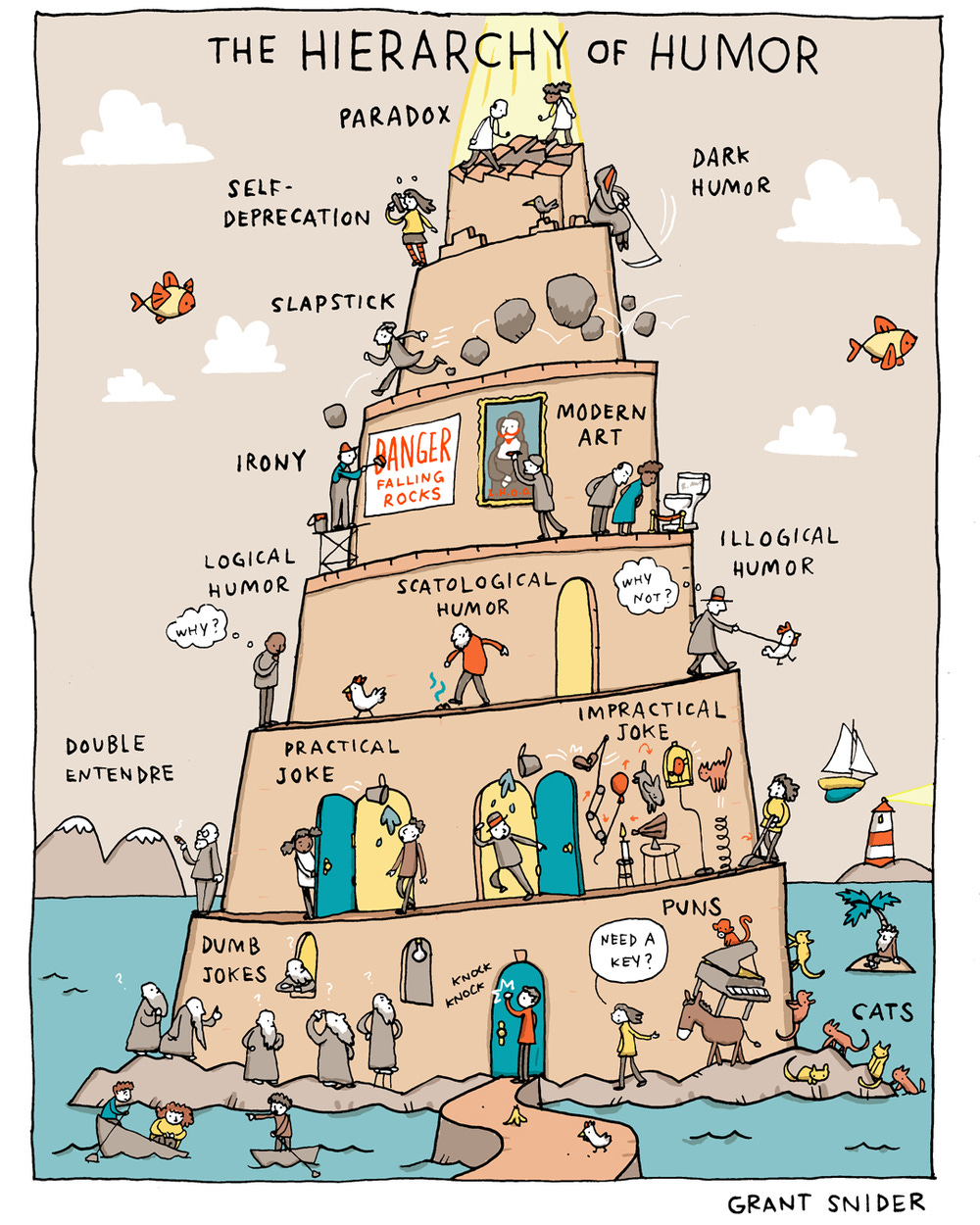
The same is true for humor. It must rise organically from the situations and characters. Mark Twain said, “humor is tragedy plus time.” Cops develop a morbid sense of humor as a defense mechanism to deal with awful situations. Watch Southland. It’s the best cop show I’ve ever seen. It’s like a five season ride-along, only filled with excitement, pathos, humor, and tragedy.
Don’t make Mt. Everest your first hike. There’s no better way to learn how to write for others than writing short stories and submitting them for publication. Keep at it until you succeed. There are countless publications that pay for short stories. That’s incentive. Very few of us can write Gone With the Wind as our first commercial offering.
Write every day. Pete Brandvold, who writes Westerns, writes three thousand words by noon come hell or high water. Pete publishes six novels a year. I’m publishing four novels this year. Surprised the hell out of me. Bronze Star, my western based on the graphic novel I created with Pat Broderick, will debut in August. Tenure #3, which I co-wrote with Blaine Pardoe, is out now. Another Bronze Star by the end of the year, and WarGate will publish my novel Seer, about a telepath who goes to Hollywood to expose pedophiles, sometime this year. I wrote these in a sustained creative burst. Tenure is like a game of tennis. Blaine writes four novels and sends them to me. I write four and send them back to him. Neither one of us wants to hold up the train! We plot them out before we begin. You can find the first three Tenures on Amazon. The fourth will be here soon. We’re working on the fifth.
I want endings that come as both a complete surprise, but in retrospect, inevitable. If you’ve seen Planet of the Apes you know what I mean.
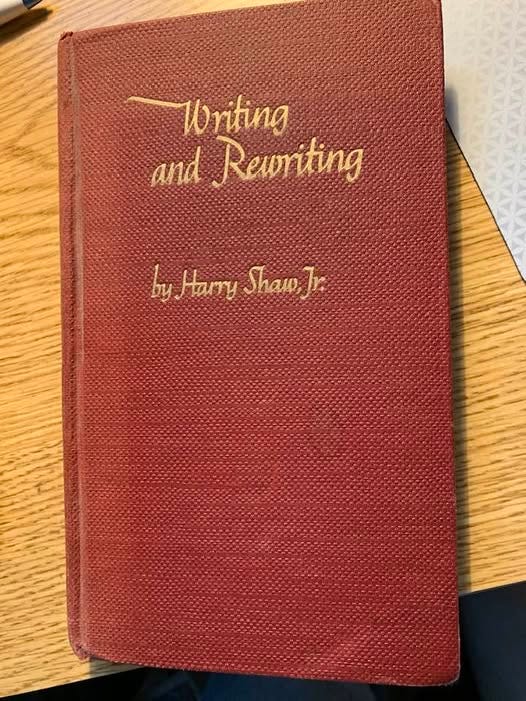
Books on writing can give good advice, but you have to learn on your own and the only way to do that is to write. The books at the top of this column are all worthwhile. My wife Ann picked this book up for me at a yard sale. It is the worst book on writing I’ve ever seen. It’s so awful I keep it as a reminder that not all books on writing are good.
Thanks, Oskar!
The thread connecting Chekhov's rifle to Chandler's "man with a gun" to humor all rising organically from character is a nice through-line — the surprise that feels inevitable in hindsight. The Dorothy Parker quote up top set exactly the right tone. The reminder that humor has to grow out of the situation rather than get bolted on is one a lot of us need.